By Susannah Abbey
This essay was originally published in the SeedBroadcast agri-Culture Journal #24
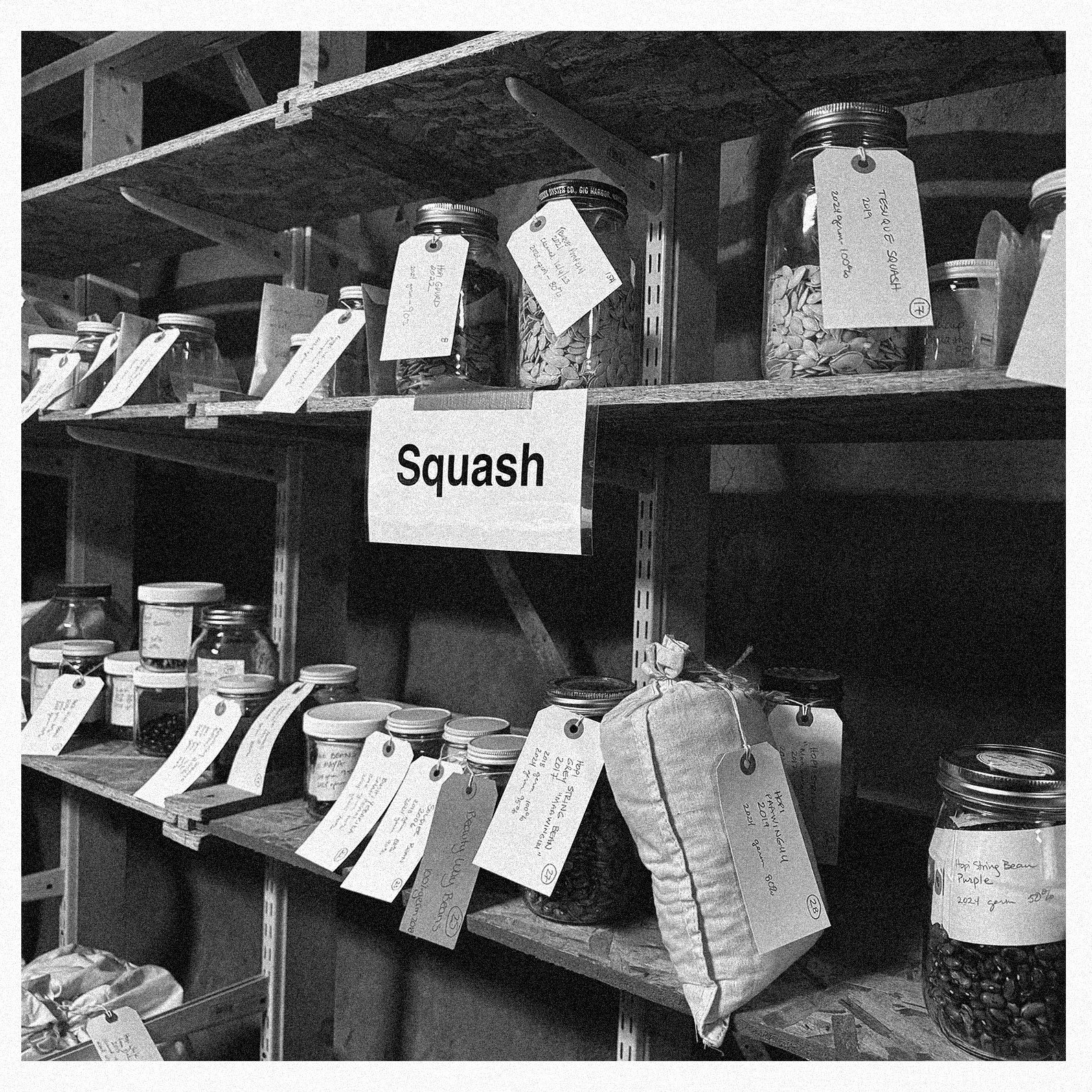
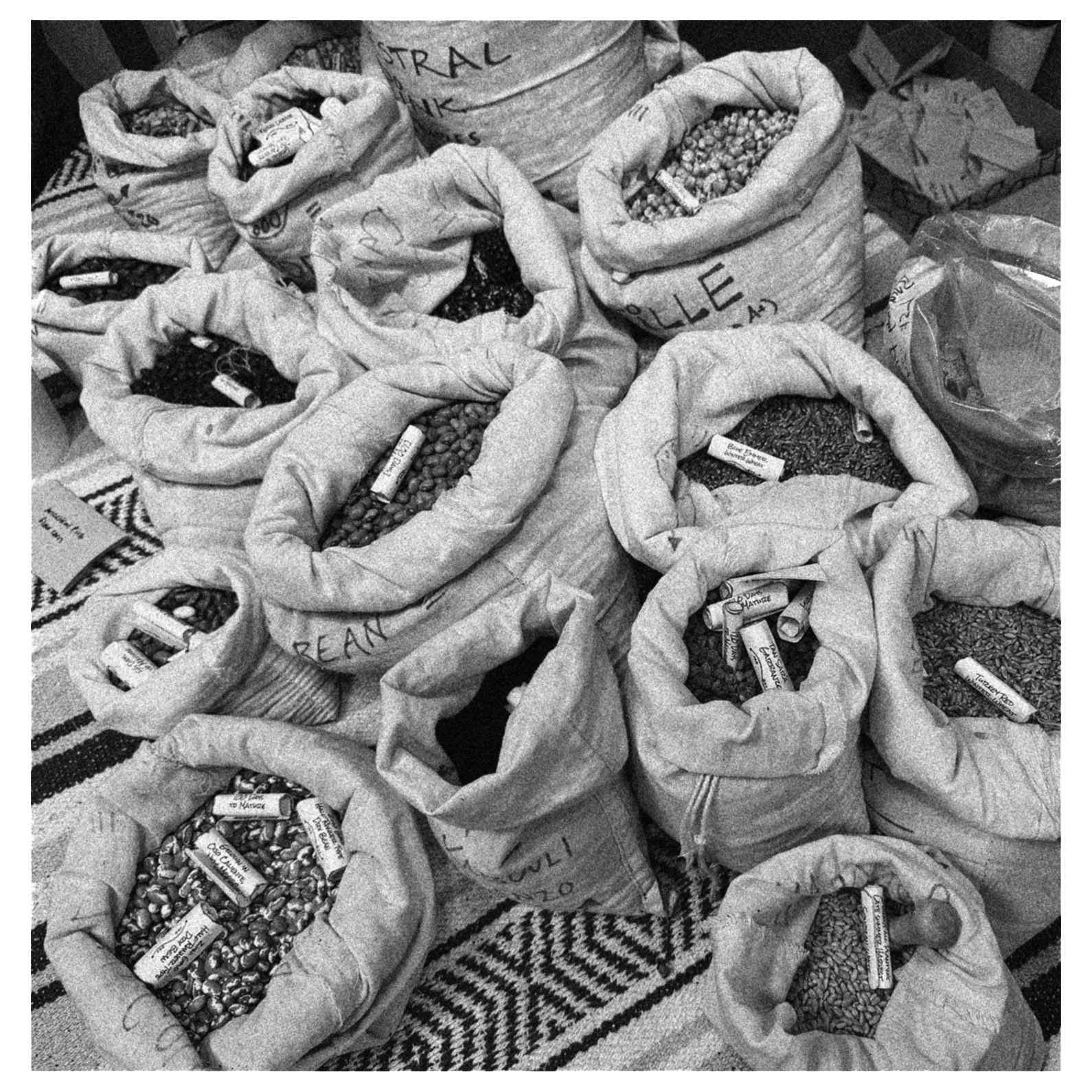
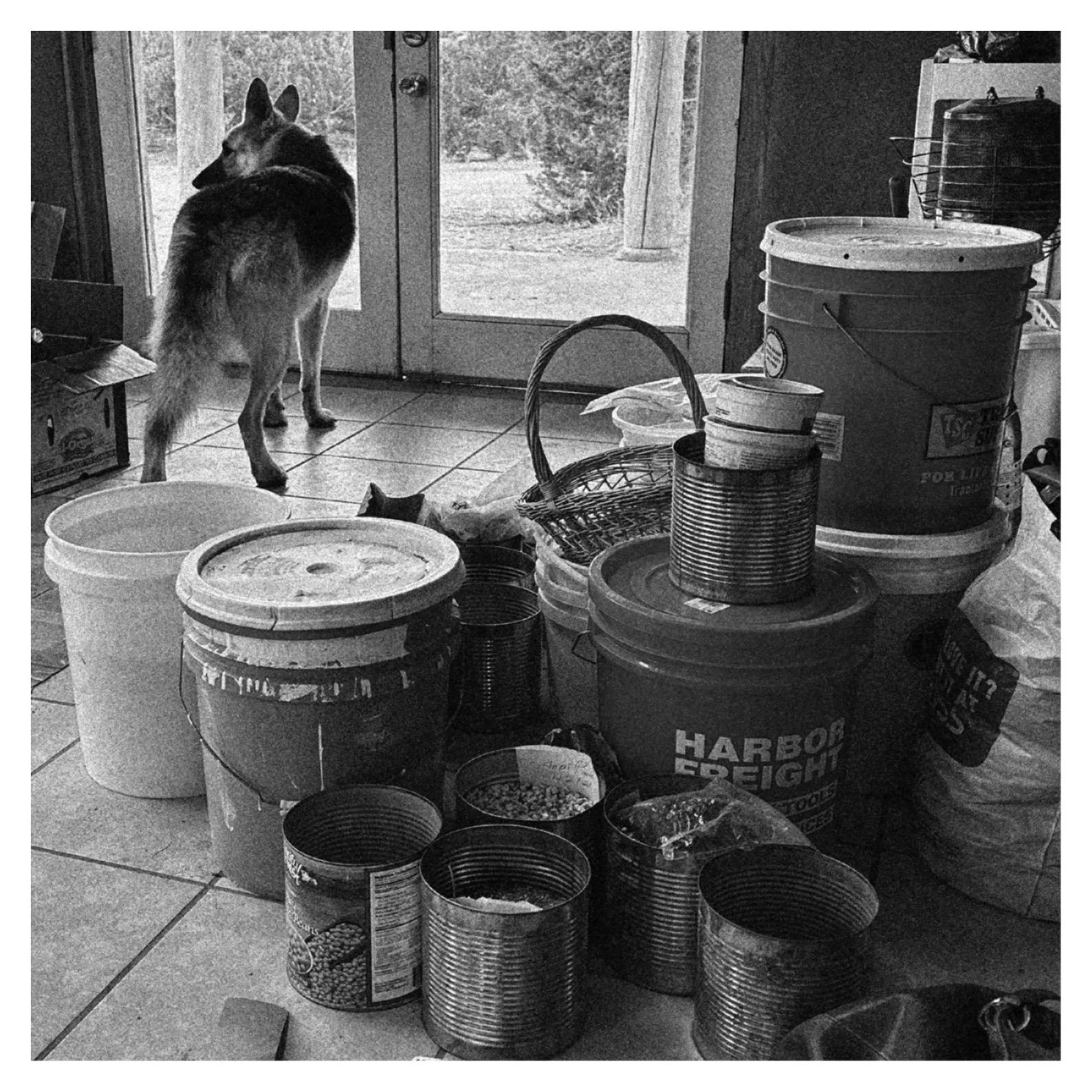
Dispersal Method 1: A Common Pool Resource
Instead of regarding seeds as commodities to be "improved," bought, and sold, it is possible to treat them as public goods or public commons, much as many of us regard air and water. A commons is an ancient social structure in which a community, rather than a private corporation or government agency, manages its own sources of survival (such as forests, creeks, oceans, and meadows). One example of a working commons is the ejido system of Mexico, a system of commonly managed land. While the federal government holds underlying ownership, individual community members have a right to farm, graze livestock, or collect firewood on the ejidos. The acequia system of New Mexico, which operates by community management, is the primary mechanism of agricultural irrigation throughout the northern half of the state and has been so for over 400 years (prior to that, Indigenous settlements managed shared canal systems). Tesuque Pueblo Farm is owned by tribal members who have the right to use the land and seed stores within agreed-upon guidelines.
Seeds are perfect examples of a common pool resource; although individual seeds are not shareable, a seed collection is shareable. But even that single, unshared seed, which one farmer plants in her own field, will produce many more seeds that she can then disperse to other growers. We may consider seeds as common pool resources whether they are vacuum-packed accessions in a refrigerated seed bank, a handful harvested and stored in an old jam jar in someone's shed, or as parts of a living community of plants. We trade them or give away for mutual benefit to other growers and to the seeds themselves.
Capitalism, with its insistence on private ownership and its mechanisms for privatizing public goods, does stymie efforts to elevate the material of basic human needs--housing, water, food, even oxygen--to the status of common-pool resources. The idea of a seed commons--access to free seeds--seems like a futile endeavor against the pressures of living in a massive cash economy, like rowing a tiny boat on a vast ocean in search of home. The tidal pull, the waves, and the fatigue all conspire to maroon the lonely rower. Some of the most well-intentioned collective efforts to provide free access to seeds eventually will run into these conundrums: how do we pay for the raw material and labor needed to grow, to package seeds? How do we pay for a structure in which to store the seeds? Where do we find the money to ship or otherwise distribute the seeds?
The Open Source Seed Initiative (OSSI) is a collaborative effort of dozens of small seed companies, NGOs, farmers, and food sovereignty advocates to bring seeds under dispersed, collective management. Montenegro de Wit writes that OSSI's work is akin to the age-old practice of "beating the bounds," in which members of a parish walk the periphery of their common land and demolish any encroachments. In 2013, the OSSI abandoned the idea of licensure entirely. Instead, Monegro de Wit writes, they developed a "social protocol:" a formal pledge to which seed buyers agree. They pledge to keep the seeds free and open and, importantly, they agree that the pledge will transfer to any recipients of either the seeds or their "derivatives." This departure from the business-as-usual approach to seed production has drawn attention and given them a platform to elevate the "organic intellectual"--e.g., one not attached to academia--and traditional, informal, expertise. The OSSI's main achievement is that it has created a community of shared values around the seed commons.
Other groups continue to create local seed commons outside of the OSSI's regime. Most groups form alliances such as La Via Campesina. La Alianza Biodiversidad comprises a dozen different peasant groups across America, from Mexico to Argentina, that advocate for recognition of water, forests, knowledge, and seeds as bienes comunes del pueblo.
Academics who study the commons have published case studies from farmer-led seed sharing systems in Mali, Kyrgyzstan, Korea, Taiwan, Japan, Peru, Myanmar, Bhutan, and Mexico. In the Global South, where agricultural lands and practices are more interwoven into daily like, seed sharing systems exist not only in rural contexts, but also in urban and peri-urban contexts.
In the U.S., public seed libraries, community-run seed banks, seed swaps, mutual aid exchanges, and other managed sharing sites, exemplify tangible seed commons. But the commons is not limited to sharing material. In order for a commons to succeed there must be planning, agreement, and active management, which some scholars refer to as the practice of commoning. Montenegro deWit writes that emphasizing commoning as an ongoing activity, rather than simply describing a resource, recenters participants: placing the focus "not just on the seed, but on farmers, seed savers and plant breeders." This requires that participants engage in constant care and maintenance not only of the seeds, water, land, and knowledge but also of the values that underly any use-agreements of those common goods. Active members of the commons negotiate and then, regularly, re-negotiate the terms of those particular common goods; how they are shared, by what community, how others may join or leave the commons, what individuals' roles are, and what to do about those who would exploit the trust engendered by the commons structure, serving their own self-interest to the detriment of others. The knowledge and skill-building produced by a community focused on sharing is itself shareable; it represents an intangible but indispensable part of the seed commons. Both the tangible (seeds) and intangible (social practices and protocols, ethics and values) must co-exist in order for the commons to be meaningful and long-lived.
The principle of the commons not only contains within it the opportunity to realize true societal equity with respect to the use of resources, but it also serves a pragmatic function. When I volunteered at Tesuque Pueblo Farm, I would often arrive on a Tuesday morning to find Ziploc baggies and coffee cans of seeds that Emigdio has received at the farmer's market or from friends or colleagues, seeds for which there is no plan to return or to grow out, but only to keep. I recall how Jeannette Hart-Mann spoke of the orphaned seeds she finds herself in possession of, bereft of their histories and sometimes even of their names, seeds which she has neither the space to store nor the capacity to care for. I remember Brett Bakker's off-the-cuff comment that he has more seeds than he knows what to do with. When I think of these stories, I understand why sharing is important not only to us, but to the life of the seeds themselves. Seeds can live in a paper bag, a glass jar, or a vacuum-sealed plastic envelope for some time, maybe a long time. But these conditions, although tolerable, are not ideal. Seeds do not belong in storage, but in the soil where they can transform. This is their gift to us. A true commons, which disperses the seeds among many potential growers, allows more of us to return those seeds to the soil. That is our gift to them.
Dispersal Method 2: Uyway, An Ethic of Care
The establishment, care, and management of a functioning, resilient seed commons are no small matter. For modern humans, steeped in the logic of capitalism and limitless growth, especially those of us who have grown up in the rights-and-freedoms political discourse of the United States, sharing is hard. Mainstream western economics teaches us to think of the things of the earth as resources to remove, divide up, and sell. And so, we must begin to re-educate ourselves, to find the parallax perspective. The establishment of commoning practices around seed keeping and sharing depends on the way in which people regard each other. We must begin by actually caring for one another.
This will require a focus on responsibilities and interdependence, of promoting care for the world that supports our humanness. "Uyway" is a Quechua word whose meaning is contextual, Emigdio tells me, but in this case roughly translates as "mutual caring." It refers not only to uni-directional care, such as the idea of a parent's care for an infant, but a loop of reciprocal care, where the grower cares for the seeds which then care for the grower in turn. In Quechua society, as in many others, seeds are regarded as family members.
In the short documentary film, Uyway (The Seed), a young woman from the Peruvian highlands travels to Norway to deposit a box of potato seeds into the Svalbard Global Seed Vault. In preparation, she composes a short prayer asking the earth to accept and bless this transfer of seeds. "Mother Earth, I offer you respect; sacred mountains, I ask for your blessing," she sings. "To walk this journey bringing your endangered children/far away where the ice reigns to stay in a safe place/and now arriving here I feel broken/because here I leave my family." As the camera follows her, carrying the box deep into the cavernous, gray labyrinth deep inside the mountain on Spitsbergen, and I am surprised by a pang of grief in my chest. My mind has flashed back to the memory of depositing my only child at college for her freshman year. Despite my European-derived education and worldview, it is hard not to feel the truth of that prayer--to understand for a microsecond what it means to say that seeds are really our relatives.
There is an analogous notion in contemporary philosophy. The ethic of care is a construct originally built by feminist theorist and psychologist Carol Gilligan, and developed by Joan Tronto, a political science professor. Tronto enumerated five "moral qualities" that underlay care ethics: 1) attentiveness, which means "our ability notice and recognize the need for care in another being;" 2) responsibility, or "assuming the responsibility of care toward that other being in whom we have seen the need;" 3) competence, comprising "follow through, doing the actual work of care;" and 4) responsiveness, which entails "being open to notice how the other being has benefitted (or not) from that gesture, in order to understand whether the care was adequate, or [if] there is a need for continued care using the same or a different strategy." Tronto, herself responsive to the discourse of other scholars that emerged from that list, later added the fifth quality: "Plurality, communication, trust and respect, solidarity." It is important to point out that Tronto does not identify the ethics of care with the carer. This is not a position of personal responsibility or religious virtue, and caring for another does not make the carer a morally superior person. Instead, Tronto emphasizes that, "The world consists not of individuals who are the starting point for intellectual reflection, but of humans who are always in relations with others." That is, we do not care for others because we are good people, or because performing an act of care will make us good. We care for others because we are tied to them. They need us as, at some point in time, we have needed or will need them. Seed saving exemplifies this ethical model: seeds need us, and we need them.
To connect this architecture of caring qualities to seed keeping, let us first recognize that seeds need care. We do this by understanding the neoliberal economics that have endangered the great array of differences within the seed world, not to mention the millennia-long efforts our ancestors undertook to develop domestic plants. Without our care, these seed varieties will be lost to the world.
Second, we take it upon ourselves to meet this need by recognizing our own connection to the environment in which seeds arise and grow into plants, and in which plants produce new seeds. We understand that our lives are dependent upon the food we eat and, as people who eat, that we have a responsibility to participate in the continued cycle of planting, growth and harvest. We also understand that our lives depend on farmers who grow the staple crops on which we base our diets and take responsibility for ensuring they can make their livelihoods from the soil.
Third, we perform the act of caregiving, calling upon our own competence to care, by following through on our self-identified responsibility. It needn't consume our life: perhaps we adopt one new variety a year of our favorite vegetable to grow out and share. Or we buy produce at the local growers market and participate in Native Seeds/SEARCH's partner-gardener growout program. Maybe we volunteer for a seed swap or at a seed library for a few hours each year.
Fourth, we step back, look, and listen to understand how our work has been received and how we might adjust our approach the next time around. Maybe we were unsuccessful at producing enough seed to share with everyone who needed it, and we decide to increase our efforts the next year. Maybe the variety we grew didn't do well in our microclimate, and so we try a different one.
Fifth, we consider how our work of care develops trust, respect, and solidarity with others. The fourth and fifth qualities are linked to one another. If we are working with others, their feedback can help with both elements--understanding how to do better and building relationships with other seed keepers that allow us to learn more, to teach more, and to enrich our sense of community.
Seed saving, when looked at expansively, is not merely concerned with collection and storage. In its other senses, saving is about preservation, uplift, centralization. The term "saving" can imply rescue: of a species or cultivar, of a beloved landscape, of a family history. It means saving the idea of seeds from relegation to corporate Siberia as mere property, genetic resources, organic technologies, or commodities. Of course, we could argue (in concert) that plants and their seeds aren’t what need saving; what we should be doing, maybe, is holding back, of saving ourselves for higher pursuits than exploiting the earth for money. We could argue (in concert, again) that seeds don’t need us to save them; leave them alone and they will save themselves. Or they will save us. All we need to do is trust them.
1. Raj & Schultz, 2019
2. Bradley, 2023
3. Montenegro de Wit, 2017
4. Semillas", 2021
5. Davies, Rut, & Feeney, 2022) (Nishikawa & Pimbert, 2022
6. Montenegro de Wit, 2017
7. If you are thinking this sounds like participatory democracy, there are many, many writers and political scientists, economists, and philosophers who would agree with you.
8. Swiderska & Argumedo, 2022
9. Tronto, 2-13, pp. 34-35
Susannah Abbey is a landscape designer, author, and teacher who works at the intersection of agroecology, the public commons, and community engagement Her forthcoming UNM Press book, Counteradaptations: Agroecology and Seed Sharing in Arid America explores how seed stewardship is shaped by ecological systems, cultural practice, and shared responsibility.