Botany of nations
By Ana MacArthur
This essay was originally published in the SeedBroadcast agri-Culture Journal #24
One can’t address the depths of the American environmental movement without addressing the remarkable, yet emotionally wrenching, history of the first peoples of Turtle Island (USA). Their story is profound, centuries old, with great teachings of resilience and resistance. I was 14, in 1969 in middle school when the occupation of Alcatraz Island, lead by the “Indians of All Tribes”, to reclaim abandoned federal land, marked the modern resurgence of the Red Power movement. Around this time a book about AIM, (American Indian Movement--which had just formed) was gifted to my family to expand our environmental education and help understand the role of the ‘first peoples’ philosophy in reverence for their environment. The following teenage years hiking through our S. Oregon homeland and taking wild edible plants courses, my thoughts would contemplate a hidden feeling seeping from the land …of the previous indigenous inhabitants…and feelings of the injustice towards these great nations. It was these years that I had a shift in consciousness regards the challenges facing indigenous peoples.
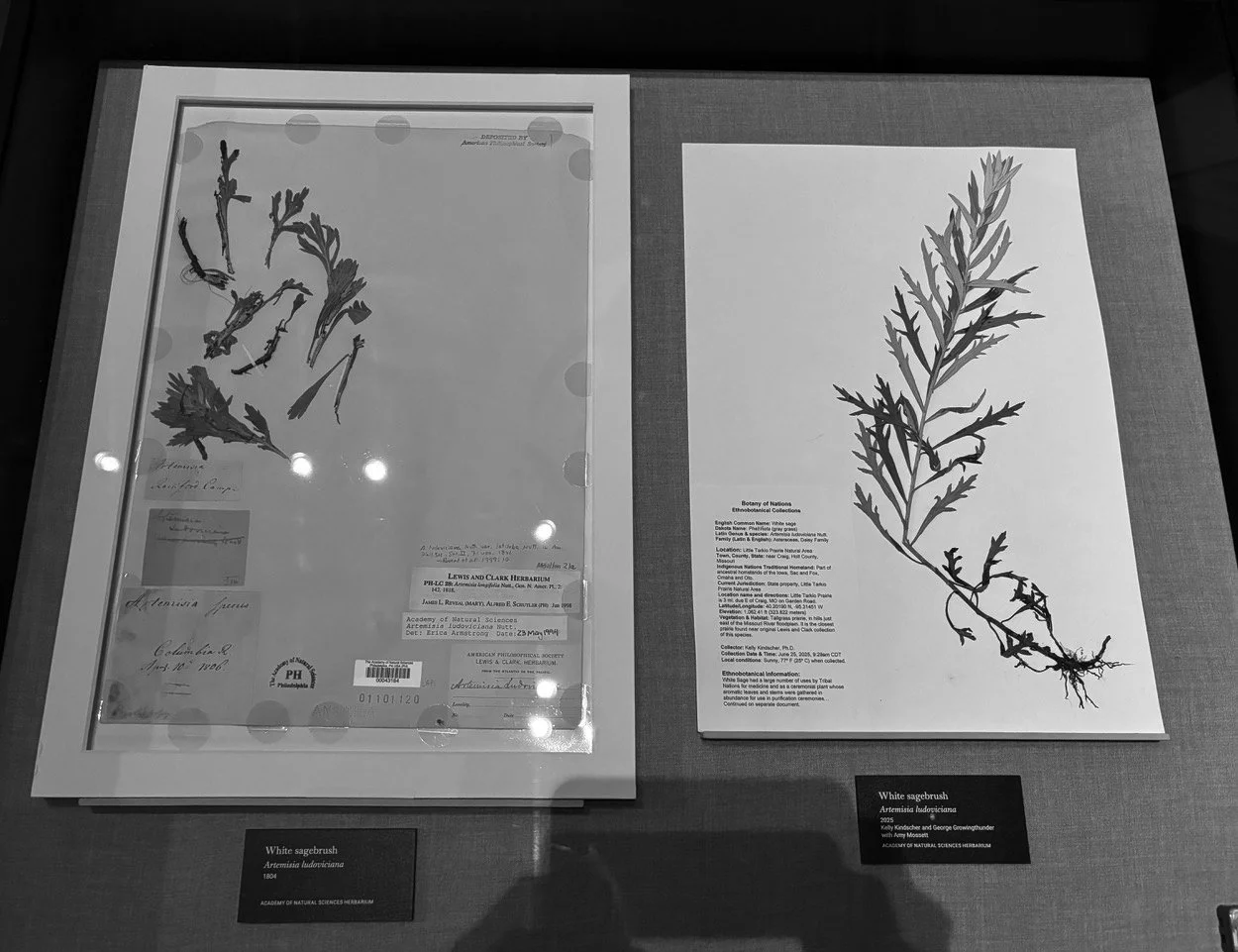
Thus, when visiting the profound exhibit Botany of Nations at the Academy of Natural Sciences of Drexel University in Philadelphia two weeks ago, I was struck by the insightfulness of marking the upcoming 250th anniversary of the signing of the Declaration of Independence (in Philadelphia) as a moment to ‘re-story’ the famed ‘Lewis and Clark Corps of Discovery’ journey, 1804-1806. The exhibition Co-curated with Enrique Salmón, a Tarahumara ethnobotanist and professor, critically restores a fuller history of the Corps’ journey through 49 Sovereign Indigenous Nations lands across the US. This seminal history of early encounters with Native perspectives and their tribal knowledge, food, and mapping guidance was absolutely critical to the survival of the Corps. The hundreds of plant specimens that Lewis observed & pressed have been kept in safe keeping for years in the Academy archives. Key plant species pressings by Lewis are on display along-side a recently collected plant of the same species from the exact geo-located spot of the original plant collected along their journey. As the new specimens were collected, over the previous year, by a group of four ethnobotanists, the plants uses and all associative kinship, or indigenous science, were shared by Tribal knowledge keepers, cultural historians, educators, ecologists and foragers in that location. This vital ‘science’ and critical part of the journey’s story is now recorded and added to the Academy archives.
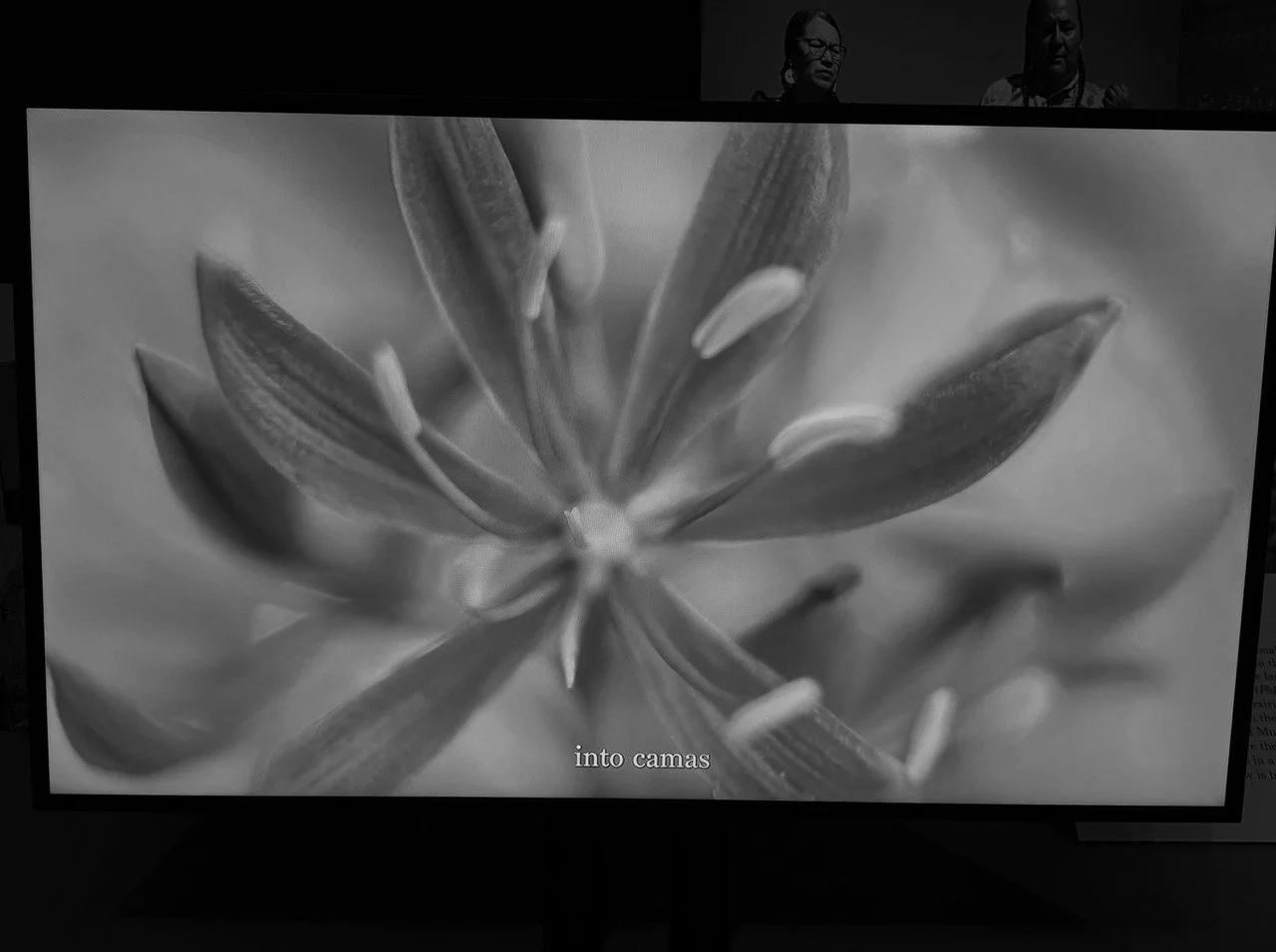
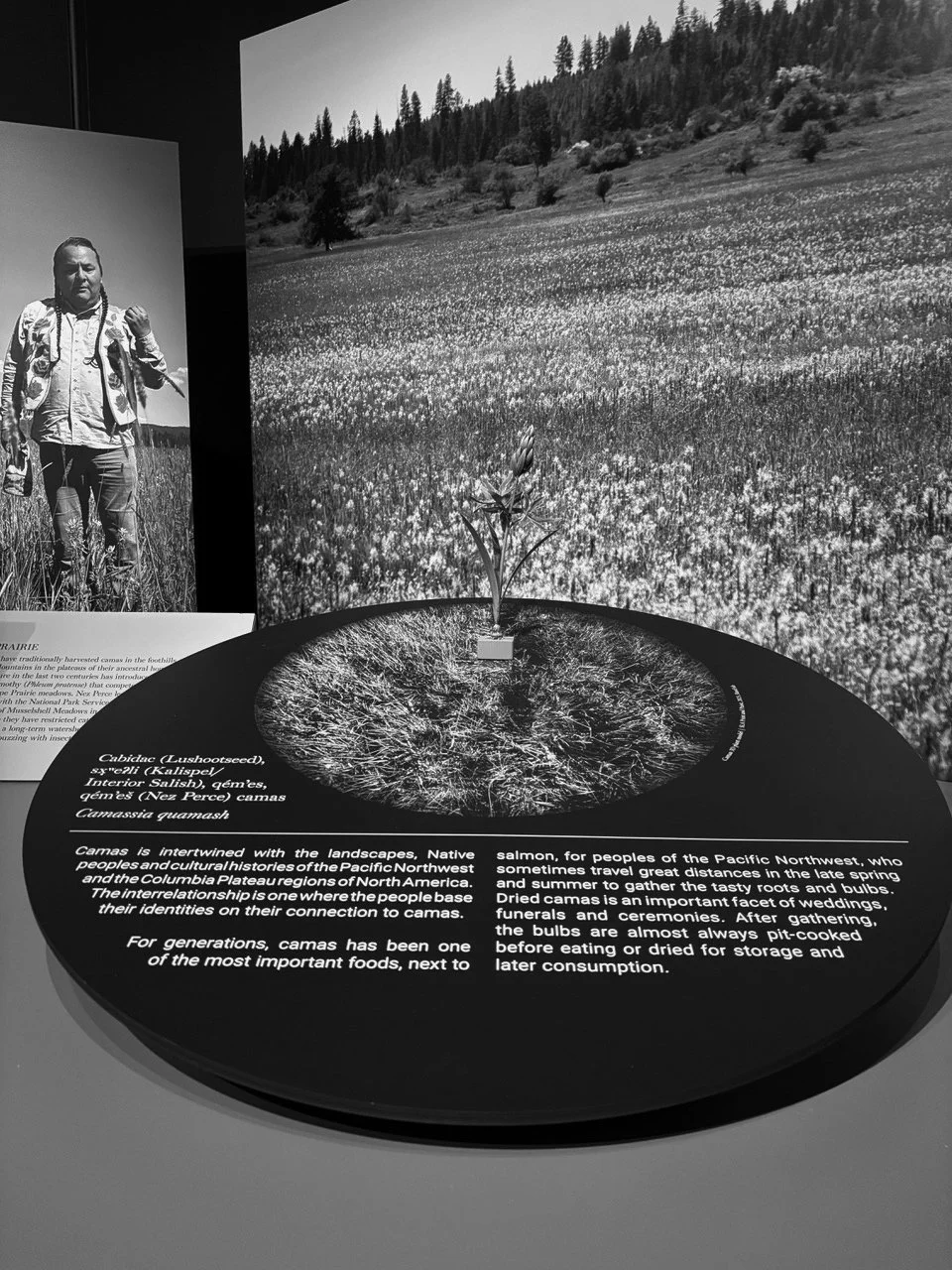
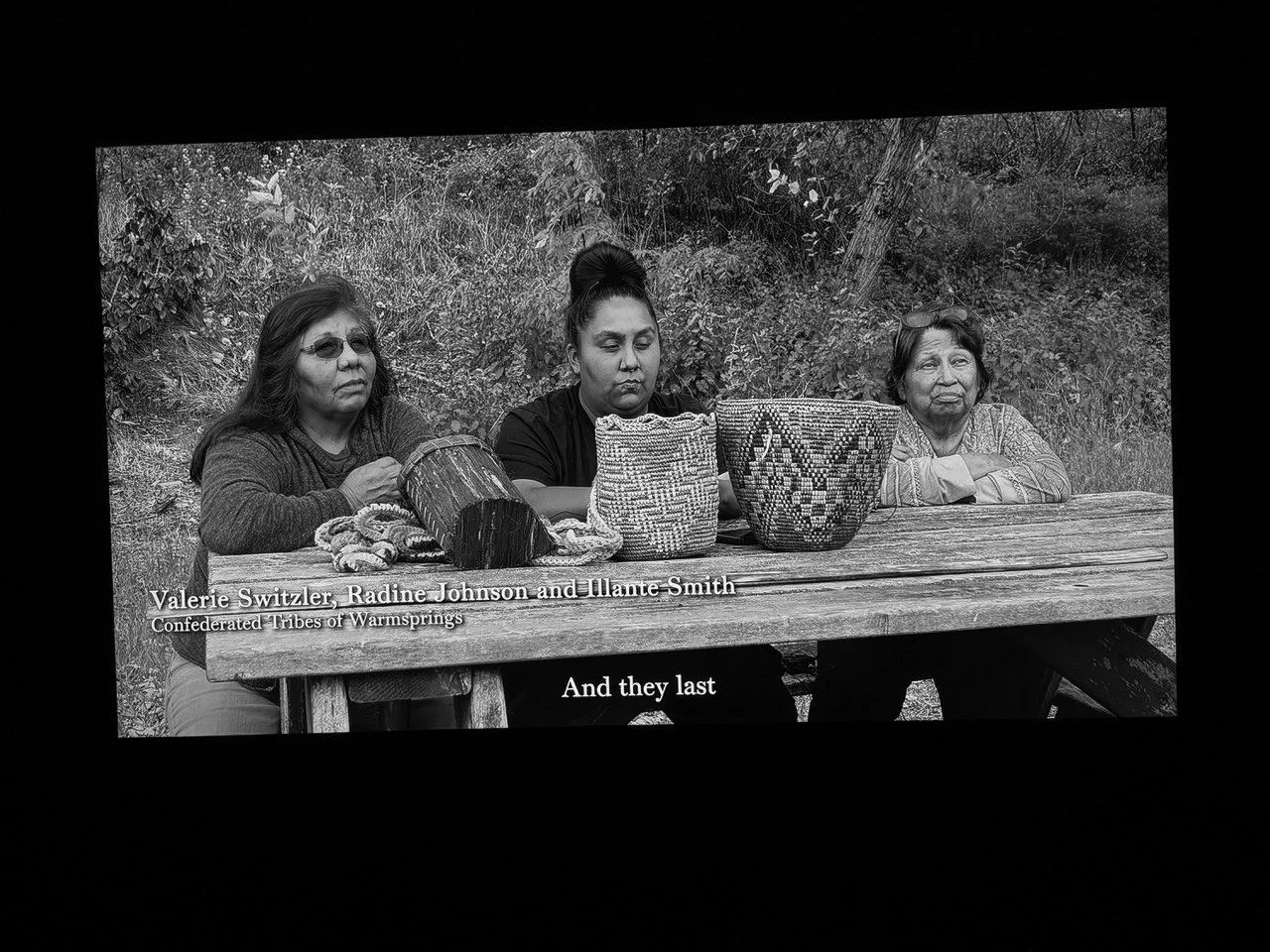
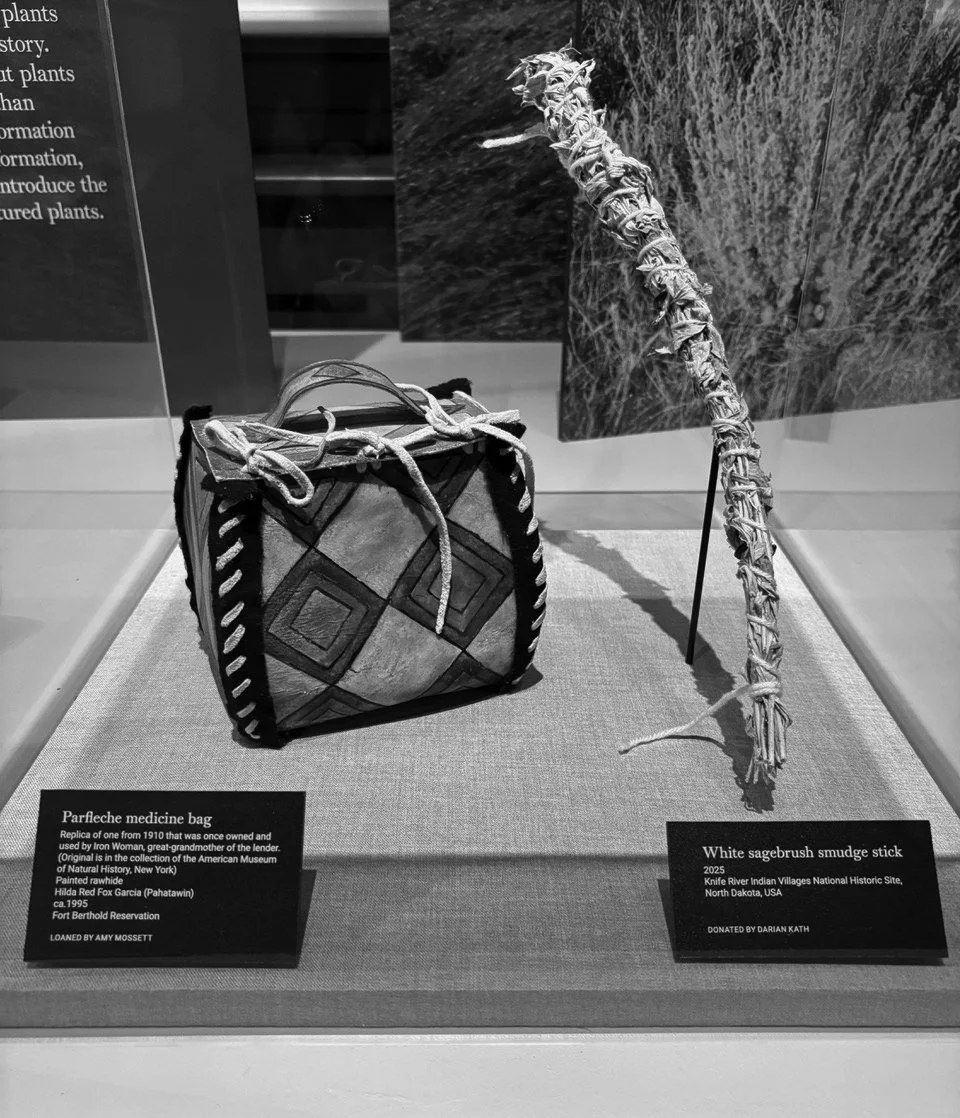
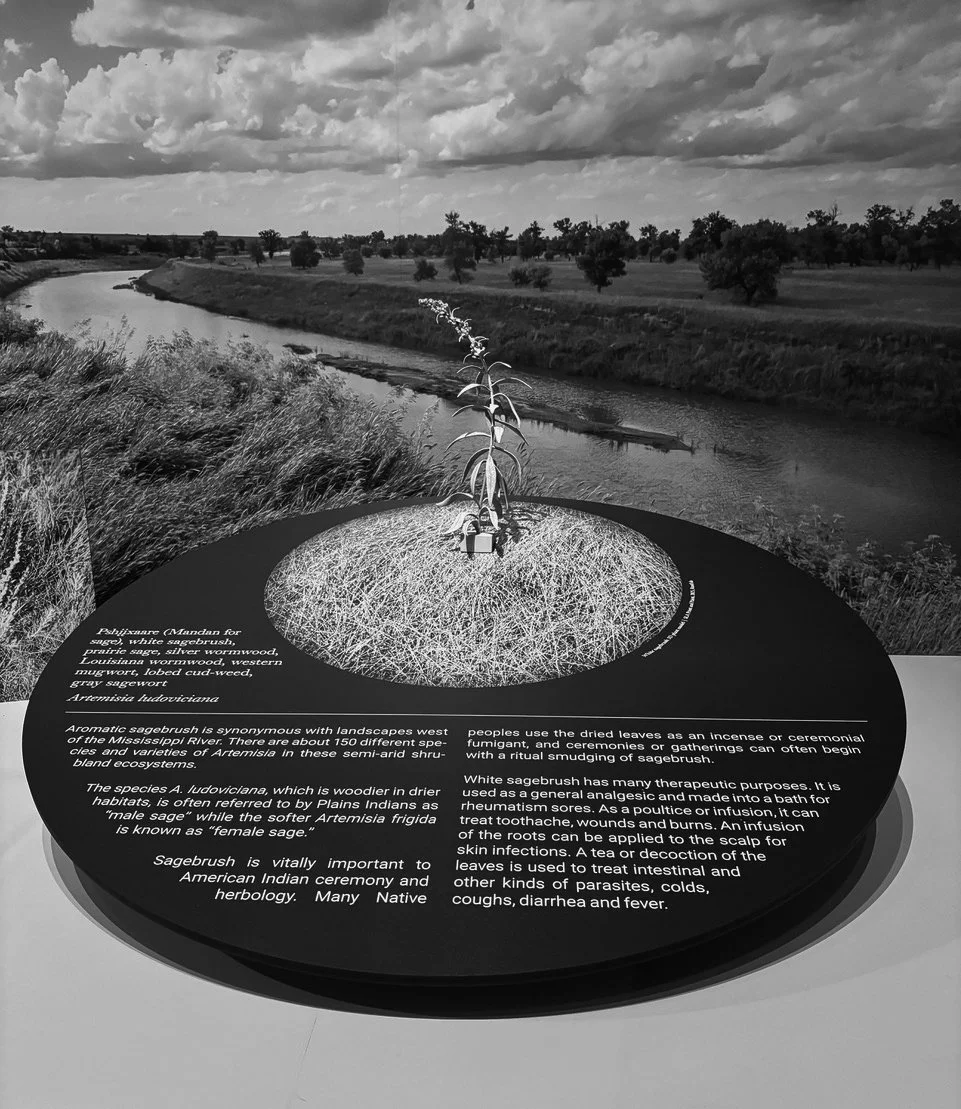
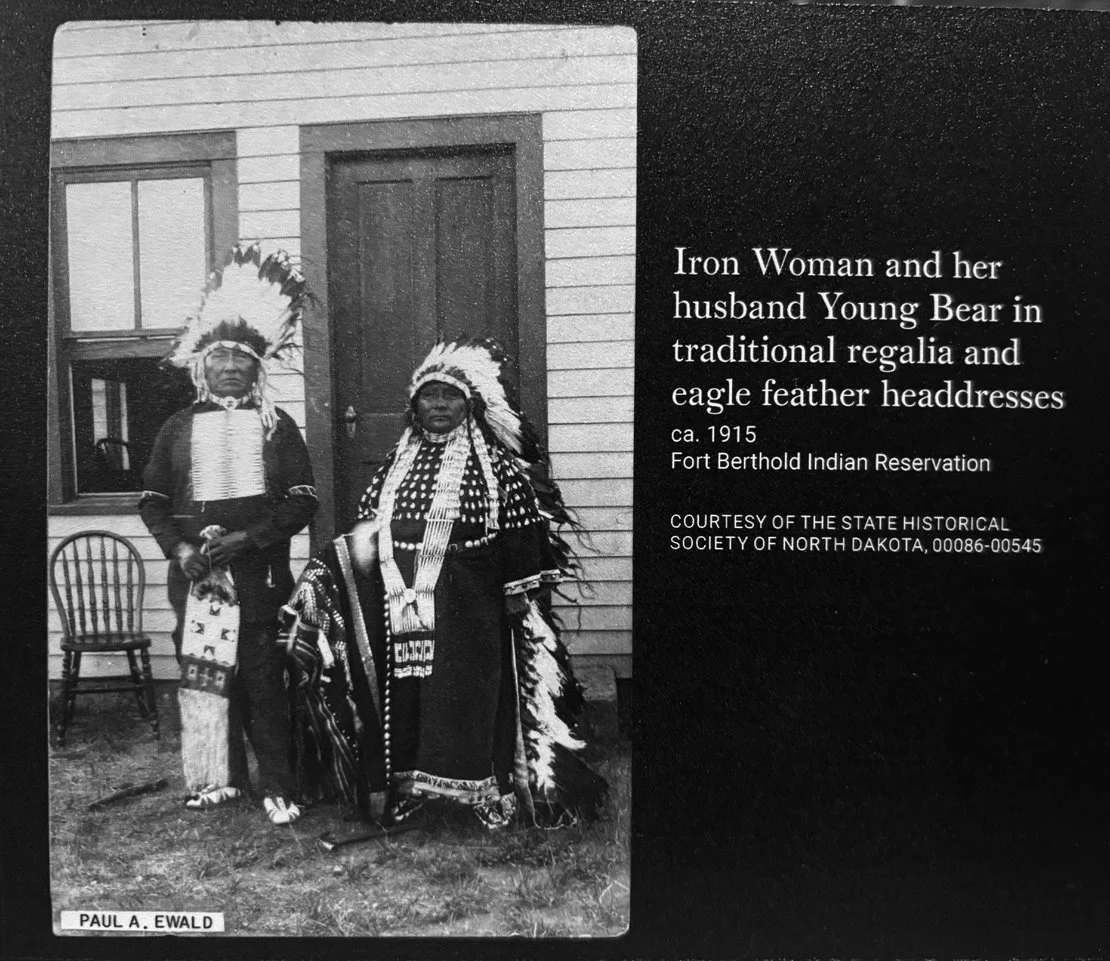
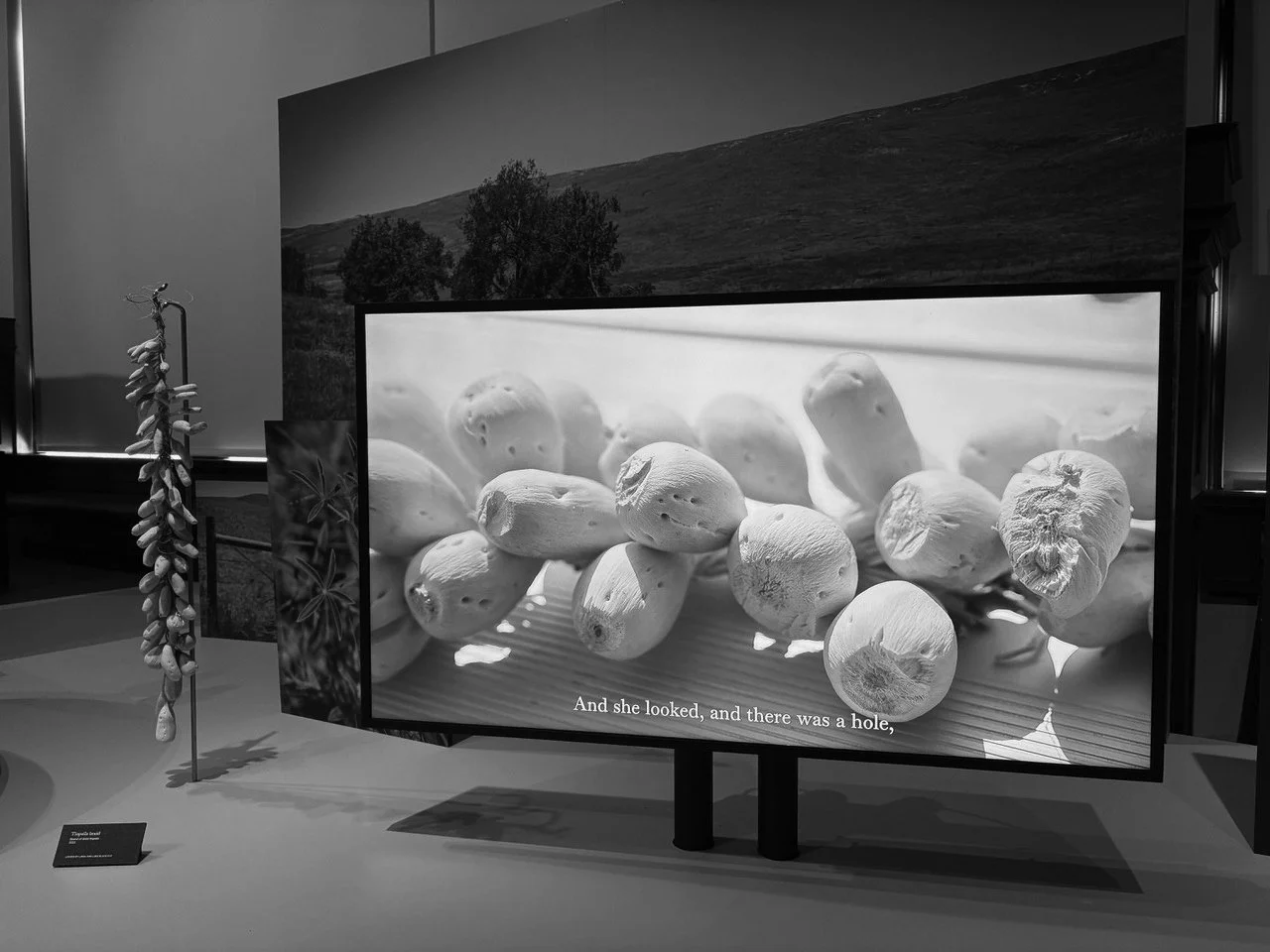
The exhibit underlines that for the indigenous all living organisms are kin. They distill teachings of how to locate the plant, cultivate it in its wild place, harvest it and respect it, all eloquently wrapped into an ‘oral story’. These oral teachings shared with their community instill wholistic environmental thinking. For westerners the myths portrayed in these stories might be dismissed as insignificant but the ingenuity of woven metaphors reveals inciteful teachings about how to treat the plant, its use in ceremony, medicine, craft, or food, and an inherent “kincentricity” between humans and plants. To elaborate on these relationships the exhibit focuses on a few key plants that are highly significant to specific bioregions and tribal territories along the Lewis and Clark trail.
“The land makes us who we are”
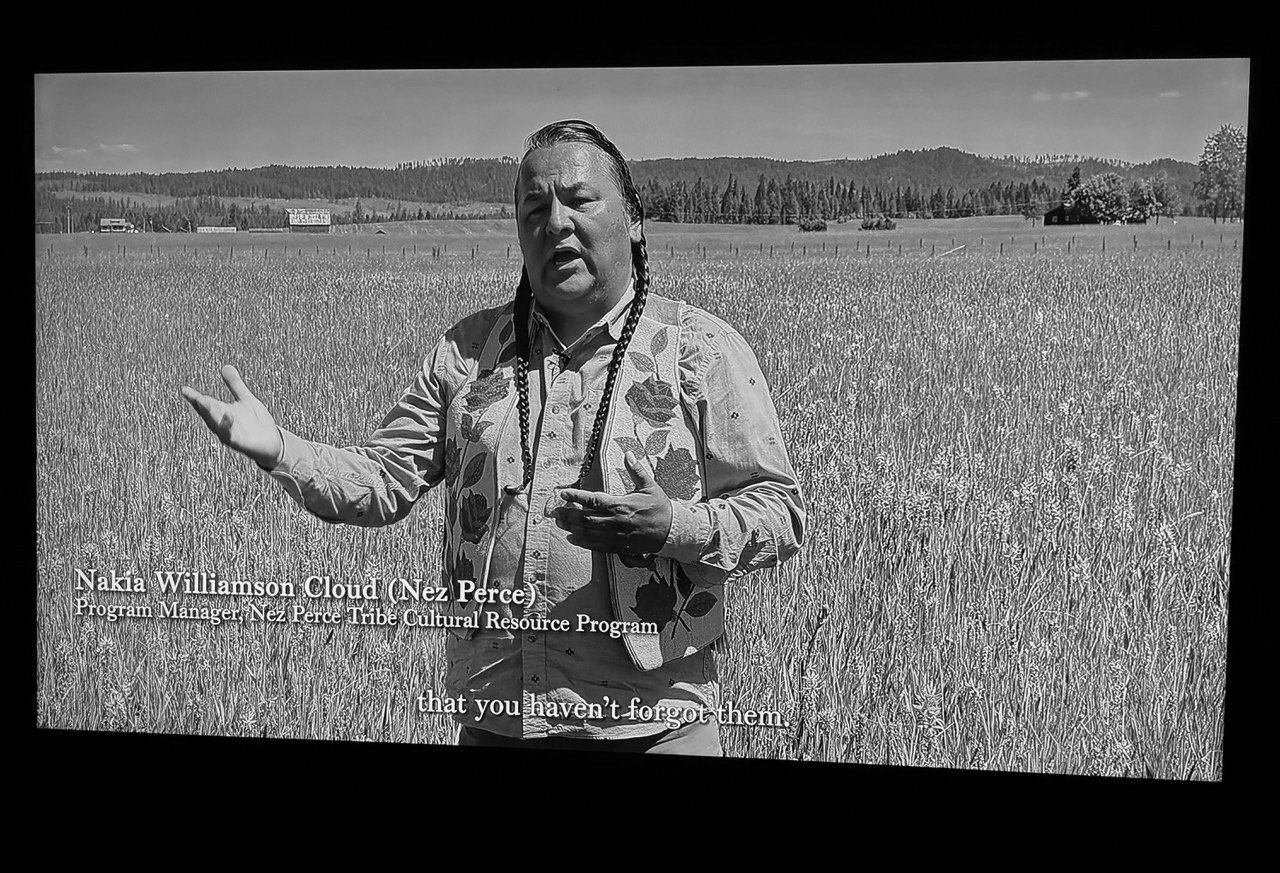
Nakia Williamson Cloud (Program Manager, Nez Perce Tribe Cultural Resource Program)
The plants discovered on this famous journey by ‘western science’ were considered firsts, but in actuality they were known for millennia by the Native Americans through their deeply embodied knowledge systems. In the exhibition labeling, each plant has its indigenous name given by a specific tribe, along-side the Latin name and European common name, underscoring that knowledge systems come in many diversities. Many of the indigenous names of ‘place’ or sites where the plants are located have reference to a type of plant or animal in that region. Many of the Native teachings about their relationship to plants shared here underline the role of the indigenous peoples as part-time caretaker of the plant. In each season, they practice tending methods to increase the plants sustainability. They are understood as relationships of reciprocity. This is most understood through ‘a story’ told that accompanies each plant on display. In indigenous science they teach that all living entities around us are relatives,… believing all life, spiritual and physical, is interconnected. They understand that as organisms we ‘share breath’ which gives us kinship. Their ceremonies are devoted to specific animals, plants, or locations of land. This implies that humans are not more important than the surrounding living world.
A Nez Perce, Nakia Williamson Cloud, in a video interview, shares his knowledge about the Camas plant, (qém’eš in Nez Perce, Camassia quamash, Latin). He elaborates… “you have to take care of it…(to demonstrate) that you haven’t forgotten them”. This plant of the Pacific Northwest is a blue lily flower that when one arrives at a field of it in bloom, it appears like a body of water. In earlier days It had been one of the most important foods in this region, alongside of salmon, where its roots and bulbs are treasured foods for weddings, funerals and ceremonies. In the Musselshell Meadows (Idaho) the Nez Perce have restricted cattle, while also emulating the role of beavers in watershed restoration, to push back invasive grasses, thus bringing back the abundance of Camas. In 1805 when the Corps reached this region, the Nez Perce saved them from starvation sharing baked roots and bread made from Camas, along with Salmon and dried meat.
The famous Sacagawea (‘Bird Woman’) a 16 yr. old Shoshone and Hidatsa woman was vital due to her plant knowledge, ability to communicate with many of the tribes of the Pacific Northwest, and superb navigation skills that contributed to the Corps survival.
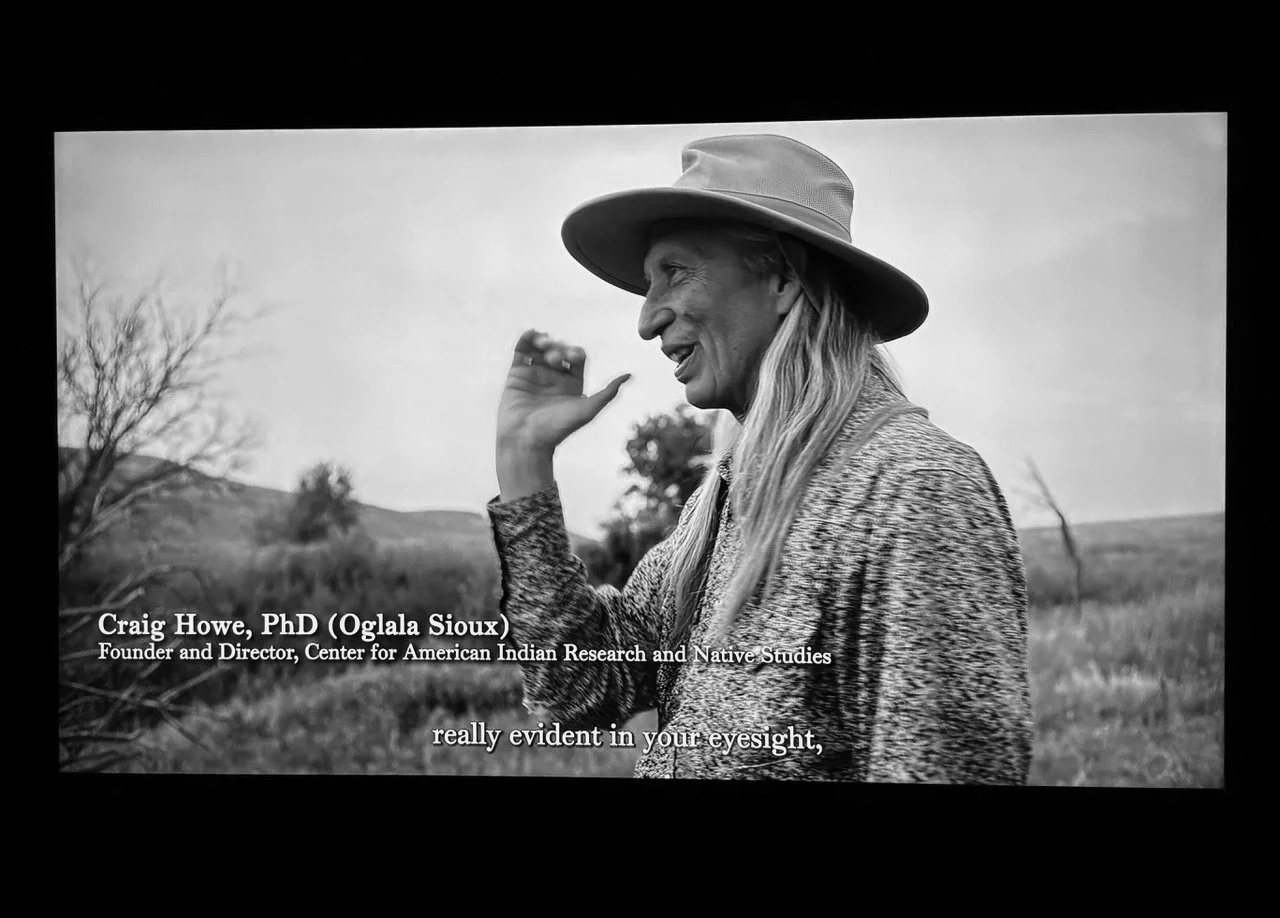
Craig Howe, PhD (Oglala Sioux) of South Dakota talks about paying attention to the changes in color on the land and the diversity of color. Names of seasons may refer to colors. A Sioux name for a season “ Khántašá-wí”, translates as ‘ripe plums month’, which is a time some of their treasured plants… plums, currents, and tinpsila… have all ripened. Tinpsila (Lakotan) or Indian breadroot, Pediomelum esculentum grows wild on the prairies of S. Dakota. It flaunts a large purple-blue flower and has a starchy tuber that can be eaten raw, cooked in soups or stews, or dried in long braided garlands. Its dried tuber is pounded into flour for making bread, and can be stored dried for years. The “Tinpsila as a Fallen Star” story heard on video, links the earth to the cosmos, shares ecological knowledge of how to collect and care for the plant, and is a reminder of the people’s responsibility to the land and their connection to the star realm.
Windsprings, a retreat and education center founded by Craig Howe and located on the Pine Ridge Reservation of South Dakota, has fenced off cattle and other domesticated animals to preserve 64 acres of rolling grass hills as a ‘native prairie sanctuary. A nearby university’s botany faculty and students have created an herbarium of 600 plants from its natural preserve.
The Western Redcedar, Thuja plicata or Ishkan in Kiksht language found in the coastal regions of Oregon and Washington, is a much-celebrated tree for use in basketry, making canoes, bowls, and medicine. The stories surrounding this plant are primarily characterized by ‘transformation’, which may have to do with the amount of rainfall that continues to yield growth and decay at a faster pace due to these rainforests. These are bioregional understandings coming from my own experience living and hiking in these lands. Tobacco held an important ceremonial role, and was used in the many pipes given as gifts to Lewis and Clark along the journey. Interestingly it was noted that pipes were the most frequently given gifts, suggesting that the Native Americans intended this as medicine to generate peace with their newcomers. A description is included by Lewis on an elaborate indigenous tending process in a field of mature tobacco plants, that included many steps to cultivate the plant.
The pipe is the Semblem of peace with all”
William Clark
President Thomas Jefferson, an amateur botanist who praised botany as one of the most valuable sciences, was the key architect of the Lewis and Clark Expedition. He believed in learning more about plants, as he envisioned the United States becoming a nation of farmers which could advance economic opportunities. His official instructions to the Corps detailed the route, a desire for scientific observations, but equally he outlined his interest in diplomatic relations with the Native American tribes. After the Corps journey was complete, Jefferson sent invitations to tribal leaders that were vital help along the route to come as guests to Washington DC. Included in the exhibit are physiognotrace head portraits (B/W silhouettes) made of 11 Tribal leaders, who visited, bringing home both an intimacy of their bravery and yet the depressing sadness of the tragedies to follow. In the following decades the increasing shrinking lands of the indigenous (in part in Jefferson’s attitudes as well) and the US government breaking treaties yielded much bloodshed and disaster.
“ When these strange people come treat them kindly as they have treated me”
Watxuukiis (Nez Perce)
Considering current signs of land regeneration by Native American visionaries, one is left with hopeful feelings that re-kinship with plants inspired by indigenous practices and philosophies and married with western science, can bring on a new age of renewal to many bioregions, myriads of species, and to generations of humans to come. I have come to have much gratitude for the role of the Academy of Natural Sciences where I have been working in their archives on an art/ science research project for the last year. They occupy a critical place in preserving scientific knowledge and history over many years, and they continue to creatively educate the public, adding to ecological literacy and a rich appreciation of the diversity of life.
Ana MacArthur’s transdisciplinary environmental art practice, integrated with the phenomena and role of light, functions as creative catalyst revealing nature’s processes and connected metaphors through the lenses of
life’s relationship to light, environmental intelligence, and appropriate technology. Having a history of working in light-based media, 20 yrs. pioneering work in dichromate holography, and co-founding a dichromate holography lab in Santa Fe, NM deepened further evolutions into the visible/near visible EM spectrum and sustainable
technologies. MacArthur’s research-based practice delves into edges of the biological/ bio-inspired, addressing bio-diversity loss and deep listening to the more-than-human. For 40+ yrs. she has collaborated with scientific research and labs, with solar ingenuity, bio-photonics experts, bio-inspired engineers, and in fieldwork with conservation, evolutionary and developmental biologists. In 2007 she embarked on an ambitious project in the Amazon Rainforest addressing climate instability and multi-species preservation. Trained in biomimicry she has planted eco-literacy thinking in youth STEAM workshops, as eco-activism, and often generated from her projects. Along with an international exhibition and lecture roster, notable residencies with renown scientists, significant awards supporting her work, and publications and scholarly writings documenting it, she holds an MFA with Transart Institute, University of Plymouth, Plymouth. UK.