By Barbara Brown
This essay was originally published in the SeedBroadcast agri-Culture Journal #24

I can’t say exactly when this idea arrived. Ideas have a way of showing up unannounced. Elizabeth Gilbert says they visit, and if you don’t accept them, they move on to someone else. This one stayed. Corn or rather maize took hold of me.
We all know corn, or think we do: buttered cobs in summer, popcorn at the movies, corn syrup hidden in our food. But what called me wasn’t sweet corn. It was maize, flint and dent varieties, the kind ground into masa for tortillas. In Mexico, maize is not just food but kin. They understand themselves to be “corn people”. She has been cultivated for nine thousand years, coaxed from the wild grass teosinte into a plant that has nourished civilizations.
Perhaps the idea began when I photographed Mexican farm workers - women in Prince Edward County, part of an art project on women and farming. I imagined a tortilla workshop, a small act of reciprocity and recognition for those Mexican women I had photographed. Like pasta, tortillas are humble yet sacred, carrying centuries of food culture with them.
Having tended my own gardens for decades, I felt compelled to plant maize myself, to learn something of her ways. A friend gifted me Mohawk white corn seeds; they were old and did not germinate, so I ordered new seeds - Cardinal Ruby Gold Flint seeds. With space in my daughter’s greenhouse and a farmer’s field generously offered, the idea took root. What began as a solitary plan turned communal. Invitations went out, and to my astonishment, everyone said yes.
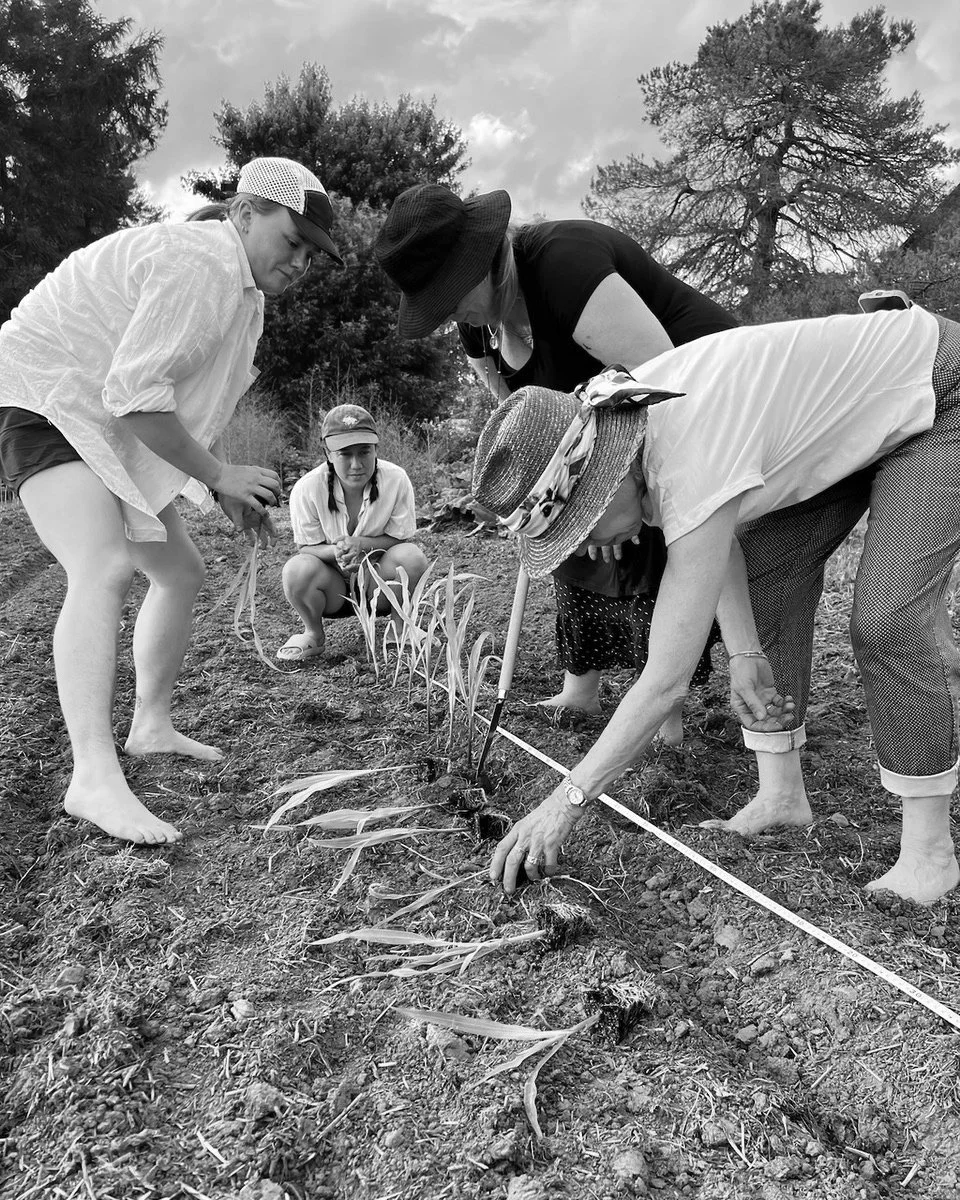
On planting day, eight of us gathered in the field. We shared stories of maize, breathed blessings onto seeds, and pressed them into the soil. There was a gravity to that moment, different from farm labor, closer to ceremony. We ended with a meal, gratitude encircling strangers who no longer felt like strangers. As I drove home, the skies opened. Rain blessed the seeds.
Tending the plot was humbling. Critters devoured a quarter of the seedlings; weeds threatened the rest. I learned to tell maize from grass by its yellow midrib, and I laid the pulled weeds down as mulch, a gesture of transformation, turning what is unwanted into protection. Later, I ringed the field with brightly coloured flags, both in celebration and defence. Tess, my host farmer, found that they resembled the lesbian flag; I liked that. The maize field wearing its own colours of pride.
Language itself became part of the inquiry. “Corn” is a slippery word, once meaning wheat in England, oats in Scotland, rye in Germany. The Taíno people, whose word mahiz meant “source of life,” gave us “maize.”
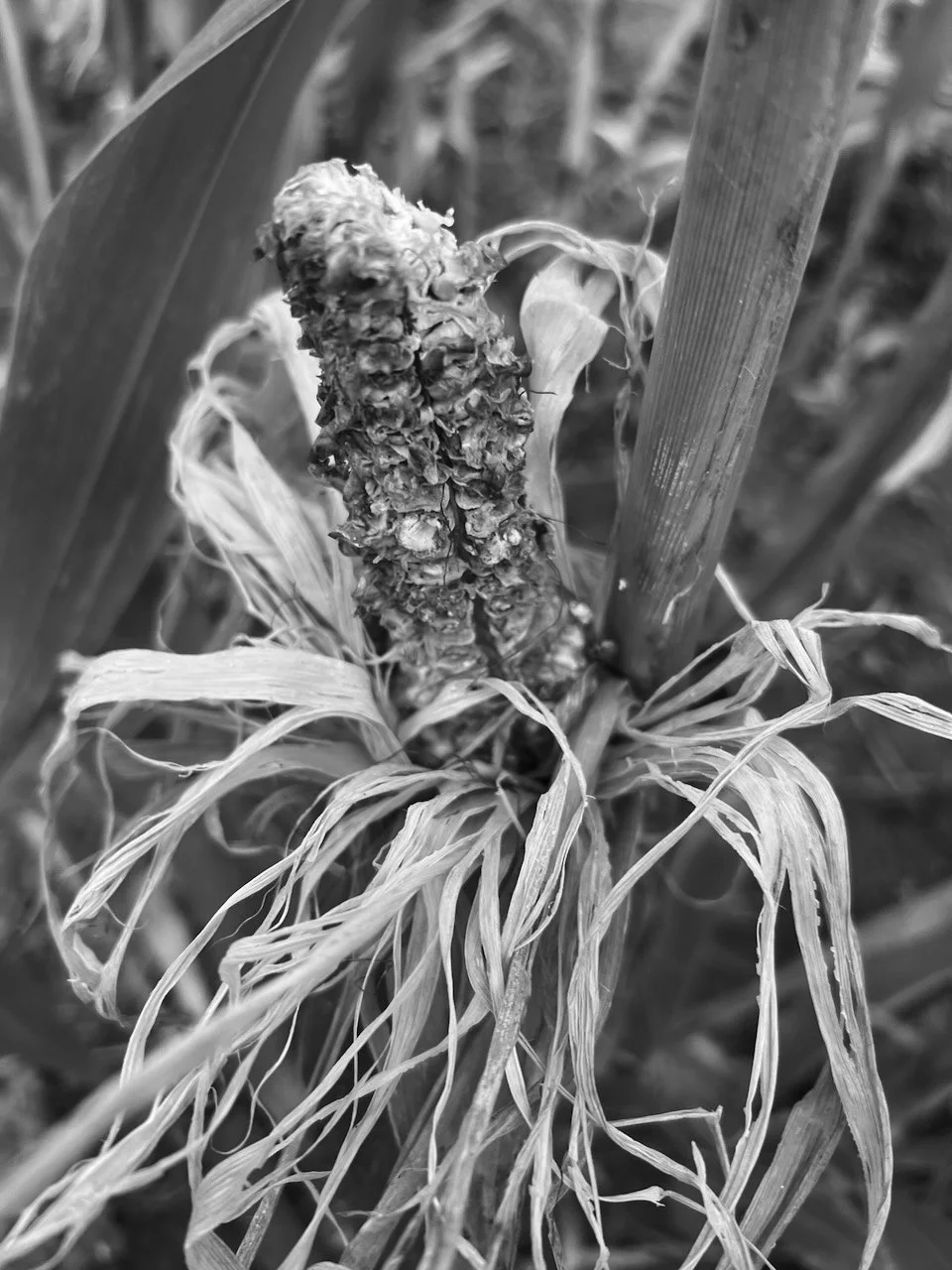
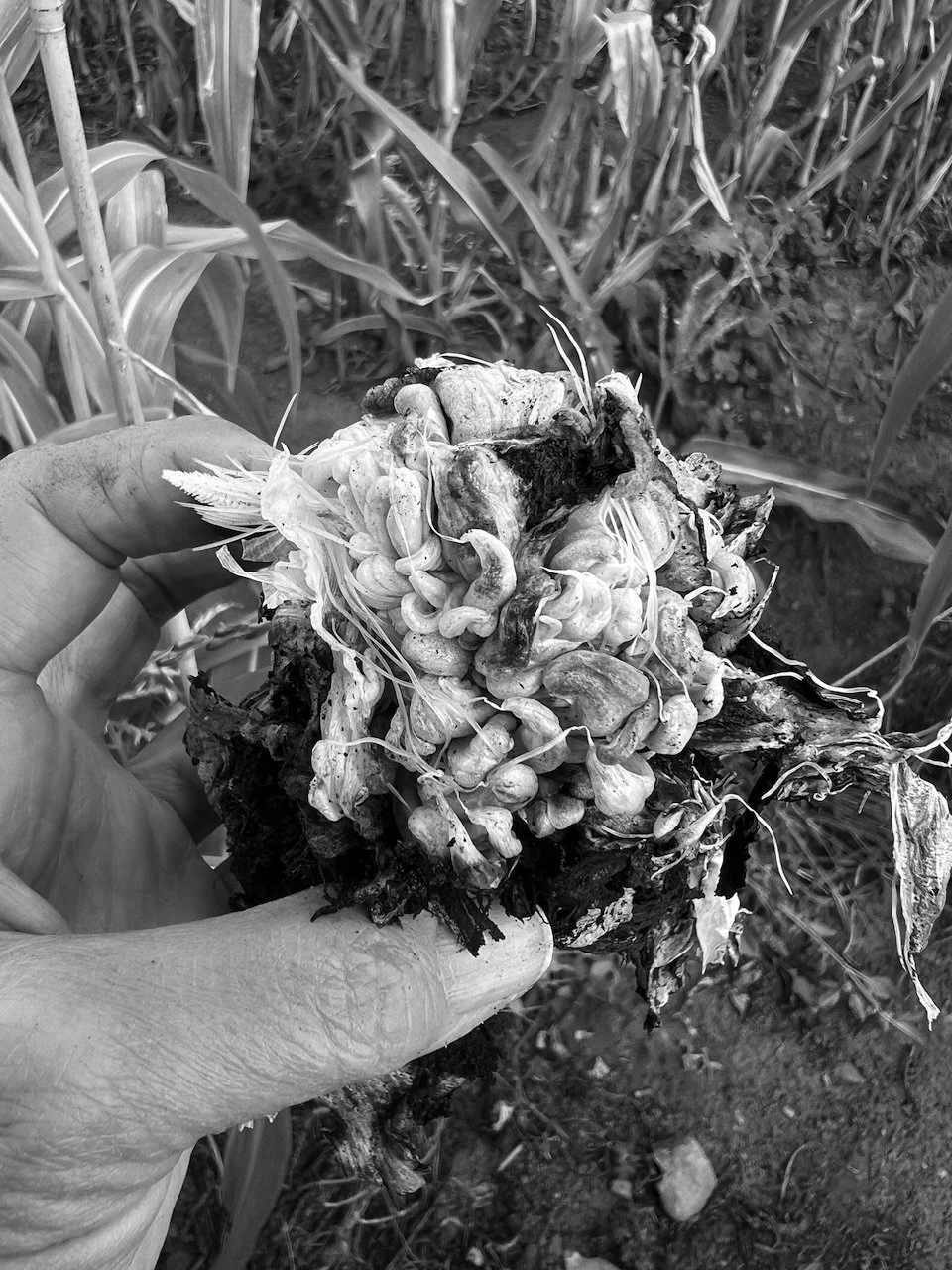
Along the way, others entered this story. Joe, a seed saver, tends rare heritage corns as though they were sacred DNA. Judy grows purple sticky corn from seeds her mother brought from Thailand. And one day, I found huitlacoche or corn smut; a fungus that swells on the cobs. To farmers it is a blight; in Mexico it is a delicacy. To me, it felt like a gift, a reminder that even decay has its beauty.
The real harvest is not the bounty of corn I imagined would result from planting but the learning, the new relationships and the humbling experience of actually trying to grow food. This project began as curiosity, but it has become something else: a conversation with land, with history, with maize herself. Perhaps I chose her, but more truly, she chose me.
Barbara Brown trained as a visual artist at the Nova Scotia College of Art and Design University and completed her graduate work at Manchester Metropolitan University, England. Brown has exhibited in solo and group exhibitions, most recently Terrior: Belonging to Place at Ottawa School of Art and LifeCycle Conversations a collaboration with sculptor Cynthia O’Brien in Ottawa and Minden, Ontario. Brown completed a commission for the School of Photographic Arts Ottawa, a four-panel outdoor photo installation for their Photosynthesis Garden. This past summer she participated in Alchemy, an artist lead residency in Prince Edward County, Ontario focusing on women farmers and their regenerative practices.